
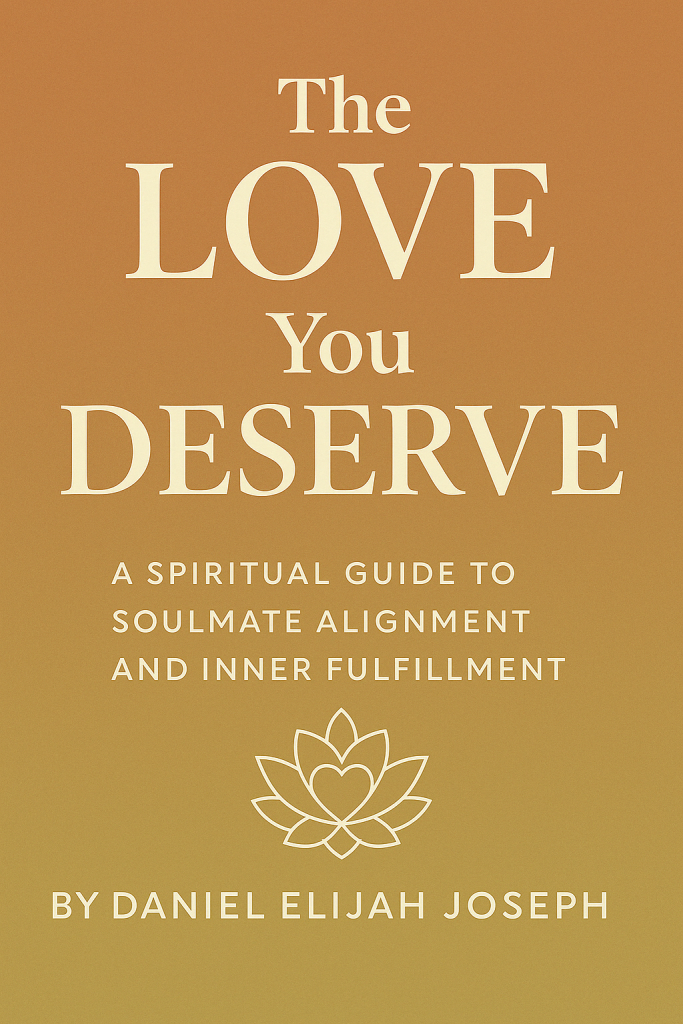
The Love You Deserve -A Spiritual Guide to Soulmate Alignment and Inner Fulfilment (Part 3 of 12)
Apr
Chapter 3: Breaking the Trauma Bond – How to Stop Repeating Cycles
• The pain of familiar love
• How trauma shapes our love patterns
• Healing tools: forgiveness, therapy, and prayer
Some relationships don’t end because of a lack of love.
They end because the love was rooted in pain—and pain cannot sustain connection.
We’ve all known what it’s like to be drawn to someone who’s bad for us, but feels so right. The highs are intoxicating. The lows are devastating. You find yourself holding onto the potential of someone, rather than the reality of who they are.
That’s not destiny. That’s a trauma bond.
The Pain of Familiar Love
Trauma bonds are deep, emotional connections formed through repeated cycles of pain, confusion, and emotional intensity. They’re often mistaken for soulmate connections because of their passionate grip, but make no mistake—they are not sacred. They are survival.
You may find yourself saying:
- “Why can’t I let them go?”
- “I know they’re not good for me, but I still want them.”
- “They feel like home—even though they hurt me.”
That’s the trick of a trauma bond. It’s not love you’re addicted to—it’s the familiarity of dysfunction. The chaos feels normal. The pain feels earned. You start believing that love is supposed to hurt—because that’s all you’ve ever known.
But let me speak this over you now: Real love does not hurt. Real love heals.
Yes, it challenges you to grow. Yes, it exposes your wounds so they can be healed. But it does not confuse you, drain you, or leave you feeling like you’re losing yourself.
The pain of familiar love is not your destiny. It is your wake-up call.
How Trauma Shapes Our Love Patterns
The roots of a trauma bond almost always go back to childhood.
As children, we absorb the behaviors of those around us. We internalize how we’re treated and form unconscious beliefs about love, worth, and safety.
If love came with inconsistency, you may equate unpredictability with passion.
If love came with criticism, you may believe you must perform to be accepted.
If love came with abandonment, you may chase emotionally unavailable people.
If love came with silence, you may fear voicing your needs.
We call this our “attachment style,” but let’s call it what it is—wounded wiring.
And wounded wiring keeps attracting wounded relationships.
Until you become aware of your inner programming, you will unconsciously re-create the emotional environment you experienced growing up—even if it hurts you.
Here’s how trauma influences love patterns:
1. Repetition Compulsion
You’re drawn to similar people or dynamics that mirror your trauma, in an unconscious effort to rewrite the past. You think: If I can get this person to love me, maybe I’ll finally feel enough.
2. Idealization of Pain
You romanticize struggle in relationships. “Real love is hard” becomes your anthem, even when the relationship is toxic.
3. Abandonment Fear
You stay in harmful relationships just to avoid being alone. You fear the emptiness more than the dysfunction.
4. Overgiving to Earn Love
You become the fixer, the savior, the healer—believing your value lies in being needed, not in simply being loved.
Recognizing the Signs of a Trauma Bond
- You feel addicted to someone who constantly hurts or disrespects you.
- You make excuses for their behavior, even when it’s clearly wrong.
- You feel intense highs and lows, but very little peace.
- You feel emotionally depleted, yet terrified to walk away.
- You’ve lost parts of yourself trying to make it work.
This is not love. This is trauma repeating itself, hoping to be healed.
Breaking Free: From Survival to Sacred Love
You cannot receive divine love while holding onto dysfunction.
You must disrupt the pattern. You must say to yourself:
“Just because it’s familiar doesn’t mean it’s right. Just because it feels intense doesn’t mean it’s divine.”
Here’s how you begin the sacred work of breaking the trauma bond:
1. Radical Honesty
The first step to breaking free is to stop romanticizing what hurt you. Name it.
- Was it manipulation?
- Was it emotional abuse?
- Was it inconsistency wrapped in charm?
You cannot heal what you’re still defending.
You cannot release what you’re still clinging to in your imagination.
Romans 12:9 says:
“Love must be sincere. Hate what is evil; cling to what is good.”
This means rejecting anything masquerading as love that is really manipulation.
2. Forgiveness (But Not Reconnection)
Forgiveness is not saying what happened was okay. It’s choosing to release the emotional charge so you can reclaim your power.
You can forgive someone and still never speak to them again.
You can bless them—and block them.
Ephesians 4:31-32 reminds us:
“Get rid of all bitterness, rage and anger… Be kind and compassionate to one another, forgiving each other, just as in Christ God forgave you.”
Forgiveness is for your freedom, not their comfort.
3. Inner Child Work
Your inner child is the version of you that first learned how love feels.
They still live in your nervous system. Still waiting to be heard, held, healed.
You heal the trauma bond by telling that inner child:
- “You don’t have to chase anymore.”
- “You don’t need to earn love.”
- “I see you. I will protect you.”
Sit in silence. Hold your heart. Let God parent the parts of you that never got what they needed.
Psalm 147:3 says:
“He heals the brokenhearted and binds up their wounds.”
4. Therapy and Trauma-Informed Healing
Sometimes prayer and journaling aren’t enough.
Sometimes your nervous system needs professional support.
And that’s not a lack of faith—it’s wisdom.
Find a trauma-informed therapist who can help you:
- Rewire attachment wounds
- Identify emotional triggers
- Set and maintain healthy boundaries
God works through people—including trained counselors.
Proverbs 11:14 says:
“Where there is no guidance, a people falls, but in an abundance of counselors there is safety.”
5. Spiritual Recalibration Through Prayer
You are not just breaking emotional ties. You are breaking spiritual agreements. Soul ties. Patterns passed down through bloodlines and heartbreak.
Pray boldly and specifically:
“God, I break every agreement I made with pain, fear, and unworthiness.
I renounce every soul tie formed outside of your will.
Restore my soul to its original state of peace and wholeness.
Make me new.”
When you pray this with faith, heaven responds. Energetic cords begin to dissolve. Your spirit is renewed. The weight lifts.
Isaiah 61:1 says:
“He has sent me to bind up the brokenhearted, to proclaim freedom for the captives and release from darkness for the prisoners.”
Letting Go Isn’t Losing—It’s Liberation
The enemy will whisper, “You’re giving up on love.”
But God is saying, “You’re giving up on pain.”
You’re not walking away because you’re weak.
You’re walking away because you’re finally strong enough to choose peace over potential.
It’s time to choose love that doesn’t hurt.
Love that doesn’t leave you questioning.
Love that feels like clarity, not confusion.
Love that feels like God is in the room—not the enemy at the door.
Breaking the Cycle: A New Pattern Begins With You
Generational pain stops with you.
Trauma doesn’t get to run your love story.
You are rewriting your narrative—with the pen of healing and the ink of grace.
You were not created to be addicted to drama, chaos, and inconsistency.
You were created for love that is holy, healing, and aligned with heaven.
But before that love arrives, your soul must be free.
Galatians 5:1 says:
“It is for freedom that Christ has set us free. Stand firm, then, and do not let yourselves be burdened again by a yoke of slavery.”
Walk away from what wounds you. Walk toward what frees you.
Journaling Prompts: Breaking the Bond, Reclaiming Yourself
- What relationship in my past or present reflects a trauma bond?
- What patterns or emotional dynamics from childhood am I replaying in love?
- What has kept me tied to people or relationships that are not aligned with my healing?
- How has my definition of love been distorted by pain or past experiences?
- What would a love rooted in peace, safety, and purpose feel like?
- What boundaries do I need to establish to protect my healing and peace?
Affirmation
I break every cycle of pain disguised as love. I release every person who has been tied to my trauma. I am no longer available for relationships that require me to abandon myself. I choose healing, clarity, and peace. The love I deserve starts with the love I give to me.
About the Author
Daniel Elijah Joseph is a spiritual teacher, author, and voice of prophetic love for a generation seeking deeper connection with God and themselves. With a powerful blend of faith, wisdom, and heart-centered insight, Daniel writes to awaken identity, realign hearts, and ignite purpose.
He is the creator of The Love You Deserve, a transformative guide to healing, self-worth, and soulmate alignment rooted in spiritual truth. His work inspires readers to break free from counterfeit love, reconnect with divine peace, and walk boldly in the truth that you are already loved.
When he’s not writing or teaching, Daniel is creating empowering resources that merge Biblical revelation with soul-deep healing—because he believes love isn’t something you chase; it’s something you become.
📖 Explore more of his writings, teachings, and resources at
👉 www.DanielElijahJoseph.com
