
China’s Humanitarian Gesture Puts America and Other Western Leaders to Shame
May
In moments of crisis, the actions of global powers reveal their true values. While Gaza lies in ruins — its people starved, bombed, and suffocated under blockade — much of the world remains either disturbingly silent or dangerously complicit. Yet, in this haunting silence, China has made a decisive move, not with weapons or words, but with a gesture of humanity. It has sent food, medical supplies, and tangible support to those suffering. And in doing so, China has inadvertently exposed the moral bankruptcy of the very nations who pride themselves on leading the “free world.”
A Shocking Contrast in Global Response
The contrast is impossible to ignore.
While America and its Western allies continue to fund, arm, and politically shield military operations that have caused untold destruction in Gaza, China stepped in with relief aid. As hospitals run out of power and clean water becomes a luxury, the U.S. government signs off billion-dollar arms deals. As children cry beneath rubble, some European leaders parrot vague diplomatic statements, never daring to confront the injustice head-on.
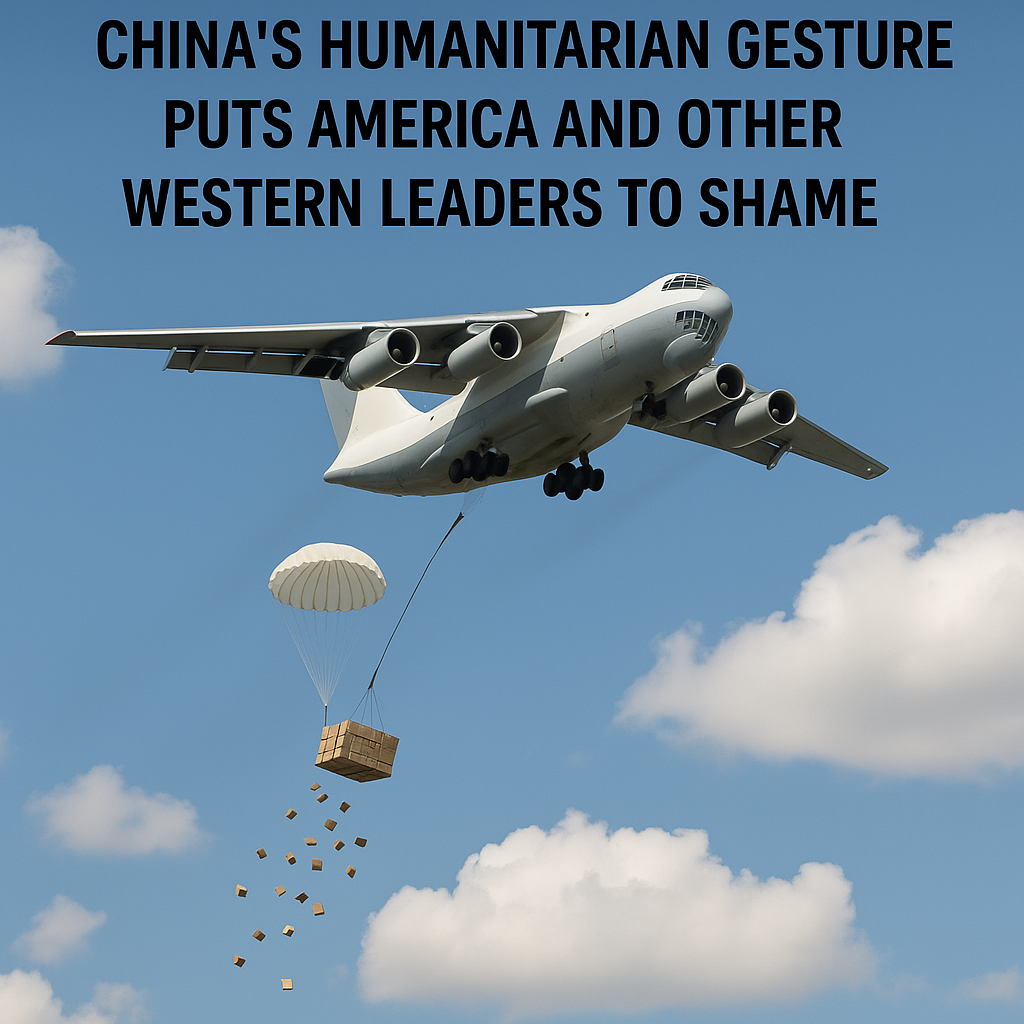
Meanwhile, a Chinese cargo plane lands with humanitarian supplies.
One act heals.
The other fuels destruction.
Where is the West’s Moral Compass?
For years, Western powers have claimed the mantle of global moral leadership — invoking human rights, democracy, and humanitarian concern to justify their foreign policy. But the real test of compassion isn’t in rhetoric — it’s in action. And when Gaza needed action, America and other Western leaders failed. Not only failed — they chose the side of oppression.
This failure isn’t neutral. It’s damning.
To send bombs while refusing to send bread is not just negligence. It’s complicity.
To speak of peace while enabling war is not diplomacy. It’s deception.
To watch children starve and do nothing is not strategy. It’s sin.
China Steps In — And the World Notices
China’s move may have been political. It may have been strategic. But it was also humanitarian. And that matters. It reminded the world that empathy can still exist in geopolitics, even if only selectively expressed.
Beijing’s aid package included essential items: food, medical supplies, and other life-saving materials. More importantly, it sent a message that, at the very least, one major power was willing to treat Palestinians as human beings — not pawns, not collateral damage, but people.
And while no country is perfect, and China has its own human rights criticisms to contend with, in this moment, it stood on the right side of history.
Western Leaders — Unmasked
The refusal of many Western governments to offer real support or demand a ceasefire speaks volumes. Their silence in the face of genocide is deafening. Their loyalty to political allies over moral principles is sickening. Their media whitewashes, double standards, and diplomatic gymnastics have shown the world what their “values” are truly worth when tested.
Where are the emergency summits?
Where is the humanitarian outcry that we saw for Ukraine?
Where is the condemnation of war crimes?
It seems that human rights are conditional — applied only when convenient, ignored when the victims are not politically advantageous.
A Turning Point?
China’s gesture will not end the war. It will not erase the pain. But it is a symbol — a reminder that in a world overwhelmed by indifference, some will choose to act. And that action matters.
It also shifts the global conversation. If a country like China — often criticized for authoritarianism — is doing more for Gaza than self-declared democracies, what does that say about the moral order of the world?
The shame is not just political. It is spiritual.
Conclusion: The Legacy Being Written
History will not forget who stood by while a people were slaughtered.
History will not forget who funded the bombs that fell on babies.
And it certainly will not forget who showed up — even with a truck of food or a plane of medical aid.
China’s humanitarian gesture may have been small in the scope of global power games, but it was mighty in meaning.
It put to shame every Western leader who had the power to help — and chose not to.
About the Writer
Daniel Elijah Joseph is a spiritual author, blogger, and humanitarian voice who speaks truth to power through prophetic insight and uncompromising compassion. With a passion for justice, divine alignment, and global awakening, Daniel writes at the intersection of faith, ethics, and current affairs — calling nations, leaders, and individuals to accountability and righteousness.
His work is rooted in both scriptural wisdom and lived experience, addressing topics like spiritual warfare, destiny restoration, and the battle between light and darkness in modern society. Whether exposing injustice or offering hope, Daniel’s writing is a clarion call for a world governed by truth and love.
Read more of his work at DanielElijahJoseph.com and join a growing community of readers who believe that words can heal, awaken, and restore what the world has forgotten.
