
Does Trump’s Second Act Accelerate Gaza’s Collapse? (Part 2 of 5)
Apr
Part 2: Silence or Sanction? U.S. Complicity and the Gaza Catastrophe
Is America enabling war crimes in Gaza — by action or deadly silence?
As the death toll in Gaza climbs into the tens of thousands and humanitarian systems collapse under the weight of ongoing airstrikes, the world is asking: Where is the leadership? And more pointedly: Where is America?
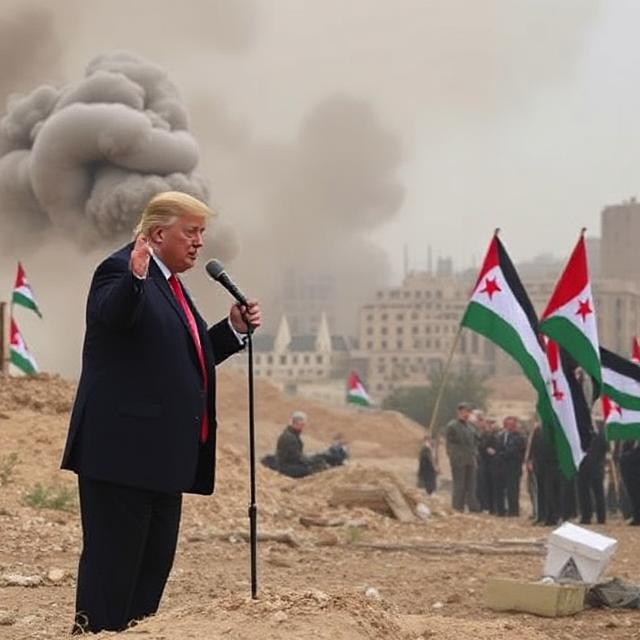
The United States has long played a defining role in the Israeli-Palestinian conflict. But with Donald Trump back in the White House for a second term, that role has taken a chilling turn — one marked not by diplomacy, but by detachment. Or, worse, by complicity. While Israeli military operations continue to reduce Gaza to rubble, the Trump administration’s words and policies are increasingly being seen not as neutral or even passive — but as enabling.
In this second installment of our 5-part series, we examine the heart of the question: Is the Trump administration merely silent in the face of suffering — or has it become complicit in catastrophe?
The Language of Silence
Words are powerful — and silence is often louder than speech. Since retaking office, Donald Trump has issued only broad, one-sided statements about “standing with Israel” and “defeating terror.” Nowhere in those statements is there acknowledgment of civilian deaths, humanitarian corridors, or international law. In press briefings and social media posts, the word “Palestinians” is almost completely absent.
This absence is not accidental. It reflects a deliberate political choice: to erase Palestinian suffering from the public record and global stage. By refusing to speak out against the destruction of hospitals, schools, and refugee shelters, the Trump administration offers what can only be called tacit approval of the conduct of war — regardless of whether it meets the criteria of just or lawful warfare.
Billions in Aid, Zero Accountability
Silence is one form of complicity. Funding is another.
The United States remains the single largest provider of military aid to Israel — over $3.8 billion annually, much of it in the form of advanced weapons systems, precision-guided munitions, and fighter jets. Under Trump’s renewed leadership, not only has that aid continued, but new packages have been fast-tracked through Congress with minimal scrutiny.
In early 2025, the Trump administration approved an additional military aid package to support Israel’s “ongoing counter-terrorism operations.” Critics immediately raised concerns, citing reports of entire neighborhoods in Gaza leveled, mass graves being dug, and starvation used as a weapon of war.
Yet no public debate was held. No conditions were attached. No mention was made of accountability for how that aid would be used — or misused.
In international law, this is not just controversial. It may be criminal. According to the Arms Trade Treaty and various U.N. resolutions, supplying weapons to a state that may use them to commit war crimes can render the supplier legally complicit. The Trump administration appears unbothered.
The UN’s Red Lights — Ignored
The United Nations, humanitarian organizations, and human rights watchdogs have sounded the alarm repeatedly. In multiple reports since late 2024, organizations like Amnesty International, Human Rights Watch, and the UN Human Rights Council have pointed to possible violations of international law in Israel’s ongoing operations in Gaza.
Allegations include:
- The deliberate targeting of civilian infrastructure
- Indiscriminate bombings in densely populated areas
- The use of starvation and siege as tactics of war
- Obstruction of aid deliveries, leading to catastrophic shortages
The Trump administration’s response? Blanket denials.
Rather than engaging with these concerns, the U.S. under Trump has consistently blocked or vetoed resolutions calling for independent investigations. In several instances, American diplomats at the UN have even accused critics of “anti-Israel bias” and walked out of emergency sessions meant to address the crisis.
Such moves send a clear message: even if war crimes are being committed, the U.S. has no intention of holding its ally accountable. This stance not only isolates America on the global stage — it undermines the very framework of international justice created after World War II.
Weaponized Rhetoric and Diplomatic Immunity
Complicity is not only about what is done — it’s about the environment created.
Trump’s rhetoric — branding all Palestinian resistance as terrorism and elevating Israeli force as moral necessity — creates a binary worldview: one side is “civilized,” the other “barbaric.” This narrative denies nuance and erases civilian pain. It also encourages Israel to pursue military objectives with minimal diplomatic restraint.
Meanwhile, efforts by journalists, human rights observers, and international courts to document abuses are increasingly labeled as hostile. Trump has even floated the idea of sanctioning international bodies that investigate U.S. allies — a move critics say is meant to place Israel above the law.
This is more than political posturing. It is the construction of diplomatic immunity for mass violence.
Aid Agencies Under Siege
While bombs fall in Gaza, humanitarian agencies are being choked off from delivering life-saving support. According to the International Rescue Committee, 2024 saw one of the lowest levels of aid access into Gaza since records began. More than 350 aid workers have been killed, warehouses looted, and food convoys destroyed.
In response, the Trump administration has done little — and in some cases, actively undermined these agencies. Earlier this year, the administration reiterated its opposition to UNRWA (United Nations Relief and Works Agency), which provides essential services to Palestinian refugees, calling it “politically corrupt” and “beyond reform.”
This hostility toward humanitarian institutions removes yet another layer of protection for civilians and reduces the flow of independent information, making it even harder to track or respond to atrocities.
What Complicity Really Looks Like
Let’s be clear: complicity in international law does not require a direct order to bomb civilians. It simply requires knowing support for actions that may violate legal or moral codes.
In this light, Trump’s second-term actions — and inactions — are deeply troubling:
- Funding that facilitates destructive campaigns
- Silence in the face of mass casualties
- Obstruction of international investigations
- Dehumanization of Palestinian civilians
- Undermining of aid efforts and watchdogs
This isn’t passive foreign policy. This is active enablement.
The Cost of Silence: A Moral Collapse
Whether Trump’s approach is strategic, ideological, or simply indifferent, the consequences are clear. Civilians are dying by the thousands. Children are growing up surrounded by trauma and destruction. And the last embers of faith in international justice are flickering out.
By refusing to speak out or intervene, the U.S. — under Trump — has become the shield behind which destruction continues. This silence, masked as strength, is a loud betrayal of human dignity.
And the world is watching.
Voices Pushing Back
Despite the administration’s silence, a global chorus of resistance is rising:
- Faith leaders denounce the immorality of neutrality.
- Jewish peace groups call for a ceasefire and an end to apartheid policies.
- Legal scholars warn that the U.S. may one day face consequences at the International Criminal Court for aiding a military campaign widely condemned as disproportionate and inhumane.
Within the U.S. itself, student protests, congressional dissent, and grassroots campaigns are pushing back. But without executive leadership, these cries remain largely unanswered.
Conclusion: A Crisis Enabled by the Powerful
To say that Trump is complicit in the Gaza catastrophe is not hyperbole. It is a statement grounded in law, fact, and conscience.
By actively supporting Israel’s military campaign — and failing to condemn or restrain it — Trump’s administration has played a central role in a humanitarian disaster. The silence is not innocent. It is strategic. And it is devastating.
In the next part of our series, we turn our focus to the human consequences of that complicity.
Part 3: Humanitarian Fallout — Aid Cuts, Blockades, and the Forgotten Millions
We’ll explore how Trump-era policies, from aid withdrawal to diplomatic erasure, have crushed Gaza’s already strained lifelines — leaving millions without hope, health, or home.
About the Author
Daniel Elijah Joseph is a spiritual writer, lecturer in Accounting and Finance, and the founder of DanielelijahJoseph.com. With a passion for truth, justice, and divine wisdom, he writes on topics that intersect spirituality, leadership, current affairs, and human dignity. His work challenges mainstream narratives and calls readers to deeper moral and spiritual awareness in a rapidly shifting world.
