
Nasdaq Stumbles as China’s DeepSeek Takes the Lead
Jan
In a world increasingly dominated by artificial intelligence (AI), the emergence of China’s groundbreaking AI model, DeepSeek, has sent ripples through global markets. Its launch has not only showcased China’s growing technological prowess but also raised concerns among investors, driving a significant downturn in the Nasdaq—a tech-heavy stock index often seen as the bellwether of the global technology sector. This article explores how DeepSeek’s introduction has affected the Nasdaq, the potential implications for the global AI race, and what it means for the future of technological innovation.
DeepSeek: A Technological Game-Changer
Developed by a consortium of leading Chinese tech giants and state-supported research institutions, DeepSeek represents a new frontier in AI technology. Leveraging advancements in natural language processing, machine learning, and predictive analytics, the model claims unparalleled capabilities in data synthesis, real-time decision-making, and complex problem-solving.
Unlike its Western counterparts, DeepSeek has been designed with a dual purpose: commercial dominance and strategic national objectives. It is tailored to enhance industries such as finance, healthcare, logistics, and national security. Its debut performance, where it demonstrated near-instantaneous analysis of financial markets and predictive accuracy in trading algorithms, has positioned it as a potential disruptor to Western-developed AI models like OpenAI’s GPT or Google’s DeepMind.
The Nasdaq Slump: Investor Reactions
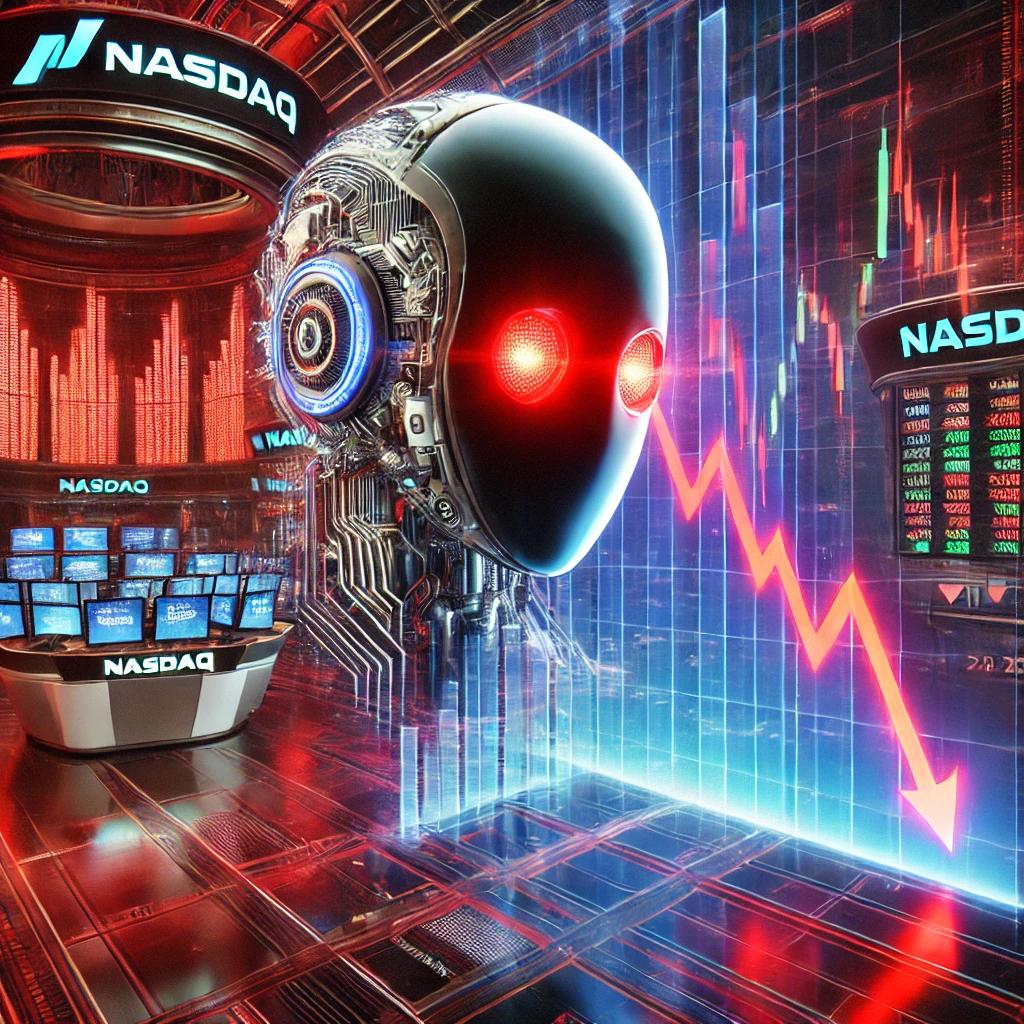
The launch of DeepSeek had an immediate and pronounced impact on the Nasdaq. Within hours of its unveiling, major technology stocks experienced a sharp decline. Companies such as NVIDIA, Microsoft, and Alphabet saw their shares drop by as much as 5%, erasing billions of dollars in market value.
Analysts attribute this reaction to several factors:
- Competitive Threat: DeepSeek’s capabilities suggest that Chinese firms may outpace U.S. tech giants in key areas such as AI-driven financial technology and big data analytics.
- Economic Realignments: The model’s success signals a shift in global technological leadership, potentially diminishing the dominance of U.S. tech firms.
- Geopolitical Tensions: DeepSeek’s launch has intensified concerns about the ongoing tech rivalry between the U.S. and China, raising fears of stricter regulations or retaliatory trade measures that could hurt U.S. companies.
Implications for the Global AI Landscape
The unveiling of DeepSeek underscores a pivotal moment in the global AI race. For years, U.S. companies have led the field, setting benchmarks in innovation and commercial application. However, DeepSeek’s debut challenges this hegemony by demonstrating that China is not only catching up but could potentially surpass Western innovation.
1. Heightened Competition
DeepSeek’s capabilities could force U.S. firms to accelerate their R&D efforts, potentially leading to a new wave of innovation. However, this race could also stretch resources and increase the risk of market saturation.
2. Policy and Regulation
The geopolitical implications of DeepSeek’s success cannot be overstated. Governments worldwide may tighten regulations on AI technology exports and intellectual property. The U.S., in particular, might impose new restrictions to counteract the perceived threat from Chinese advancements.
3. Ethical Considerations
DeepSeek’s development highlights ethical dilemmas surrounding AI use. Concerns about surveillance, data privacy, and potential misuse are likely to intensify, particularly as governments leverage such technologies for strategic purposes.
Investor Outlook: A Time for Caution or Opportunity?
While the Nasdaq’s stumble reflects immediate investor anxiety, it also presents a moment of reflection. The global AI landscape is entering uncharted territory, where collaboration and competition coexist. For investors, this might be a time to reassess strategies, focusing on companies that can adapt to and thrive in a more competitive environment.
Opportunities in Adaptation
U.S. firms have historically demonstrated resilience in the face of competition. Companies that prioritize innovation, expand into emerging markets, and form strategic alliances may emerge stronger.
Diversification
Given the uncertainties surrounding the U.S.-China tech rivalry, investors may consider diversifying portfolios to include emerging markets or sectors less exposed to geopolitical risks.
The Path Forward: Cooperation or Confrontation?
The launch of DeepSeek raises a fundamental question: Should the global AI race be viewed as a zero-sum game, or is there potential for cooperation? While competition often drives innovation, collaboration could address shared challenges such as climate change, global health crises, and cybersecurity threats.
Collaborative Opportunities
DeepSeek’s success could spur international dialogue on ethical AI development and standards. Joint initiatives, though challenging, might ensure that AI serves humanity rather than exacerbating divisions.
Avoiding Fragmentation
A fractured global technology ecosystem—with separate standards, platforms, and markets—would hinder progress. Policymakers and industry leaders must work to prevent such an outcome, fostering a balanced approach that encourages innovation while addressing security concerns.
Conclusion
China’s DeepSeek has sent shockwaves through global markets, underscoring its potential to redefine the AI landscape. While its impact on the Nasdaq highlights immediate challenges, it also opens the door to long-term opportunities. The global tech community stands at a crossroads, where the choices made today will shape the trajectory of innovation, collaboration, and competition for decades to come.
For investors, companies, and policymakers, the emergence of DeepSeek is a wake-up call to adapt, innovate, and engage in meaningful dialogue. Whether this moment leads to a more divided or united world will depend on the collective response to this transformative technological breakthrough.
About the Author
Daniel Elijah Joseph is a seasoned writer and lecturer specializing in Accounting, Finance, and Corporate Strategy. With a deep passion for uncovering insights across corporate finance, market trends, and spiritual growth, Daniel Elijah Joseph combines expertise and creativity to craft impactful articles and empower readers. Explore more of their work and insights at DanielelijahJoseph.com.
