
UK After Brexit: Sovereignty Secured or Economy Endangered? (Part 2 of 5)
Feb
A 5-Part Series Exploring the Real Impact of Brexit
This five-part series will critically analyze the UK’s post-Brexit reality, weighing the benefits of sovereignty against the economic and social consequences. Each part will delve into a crucial aspect of the Brexit aftermath, offering an in-depth, balanced perspective.
Part 2: Sovereignty Reclaimed – A Stronger Britain or a Hollow Victory?
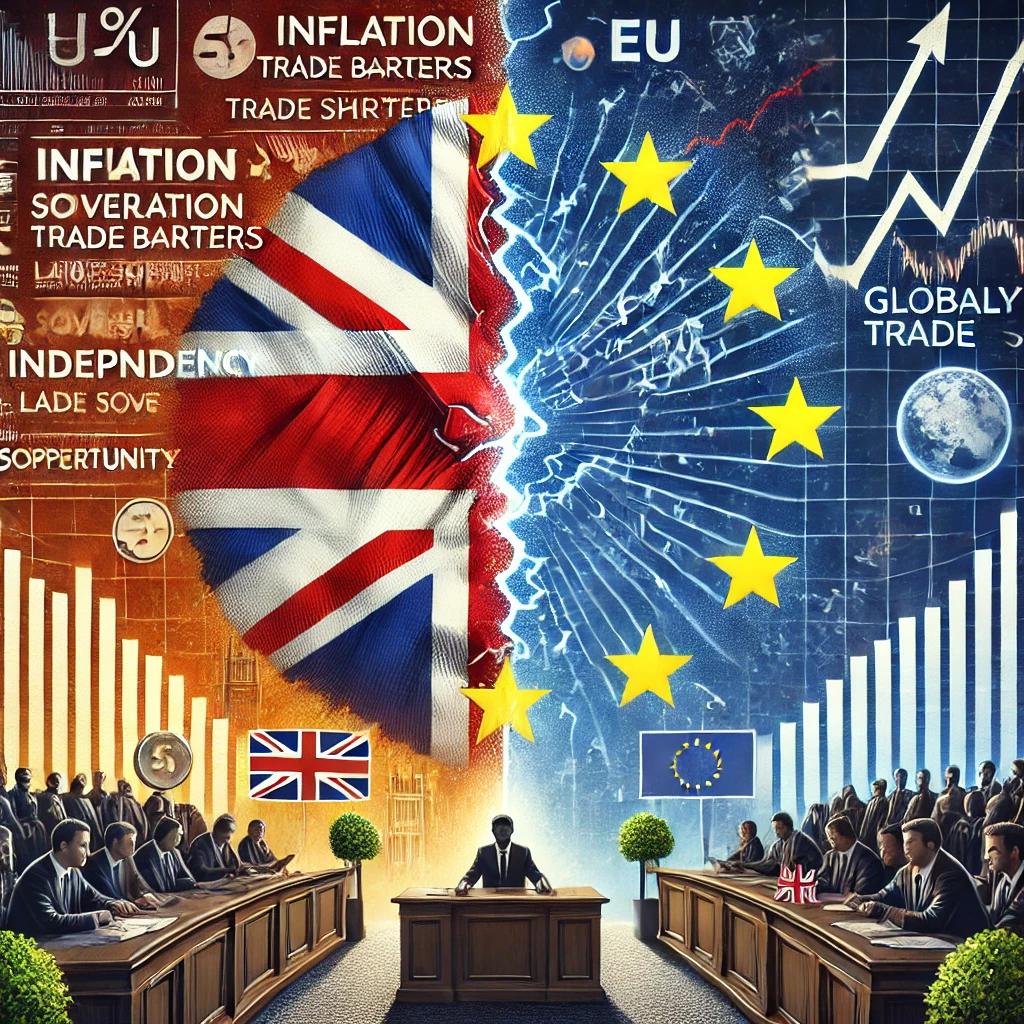
The concept of sovereignty was a cornerstone of the Brexit campaign. “Take back control” was the rallying cry of the Leave movement, promising that Britain would regain autonomy over its laws, borders, and trade. However, years after the UK formally exited the European Union (EU), the question remains: Has Brexit truly restored British sovereignty, or has it resulted in a complicated and less advantageous form of independence?
This article explores the reality of post-Brexit sovereignty by examining the changes in governance, regulatory control, border policies, and the UK’s standing in global trade.
Taking Back Control: What Sovereignty Means Post-Brexit
Sovereignty, in the context of Brexit, was framed as the ability of the UK to make its own laws, control its borders, and determine its own trade policies without interference from Brussels. Euro sceptics argued that EU membership constrained the UK’s decision-making, particularly through regulations imposed by the European Commission and the rulings of the European Court of Justice (ECJ).
By leaving the EU, the UK aimed to:
- Legislate independently without needing to comply with EU directives.
- Control immigration by ending the free movement of people.
- Negotiate trade deals that serve its national interests rather than being bound by EU agreements.
While these objectives seemed clear, the implementation has been complex, with Brexit producing mixed results regarding Britain’s newfound independence.
UK vs EU: Who Holds the Power Now?
Despite leaving the EU, the UK still faces constraints that limit its full autonomy. The UK-EU Trade and Cooperation Agreement (TCA), signed in December 2020, governs the ongoing relationship between the two entities. This deal allows for tariff-free trade in goods but comes with regulatory alignment in several sectors, meaning that the UK must still comply with certain EU rules to maintain market access.
Moreover, Northern Ireland remains a unique challenge. Under the Northern Ireland Protocol, a compromise was struck to prevent a hard border between Northern Ireland and the Republic of Ireland. However, this arrangement has effectively left Northern Ireland within the EU’s regulatory orbit, creating internal friction and calls for renegotiation.
Another area where power dynamics remain skewed is dispute resolution. While the UK no longer falls under the jurisdiction of the European Court of Justice, trade and regulatory disagreements are now settled through arbitration mechanisms outlined in the TCA—still giving the EU significant leverage.
Thus, while the UK has formally left the EU, its sovereignty is still influenced by the need to cooperate with the bloc, raising questions about whether power has truly shifted in Britain’s favor.
Laws, Regulations, and Borders: Has Anything Changed?
Legal Independence: One of the touted benefits of Brexit was the ability to repeal and replace EU laws with UK-specific legislation. While this has begun to happen, the pace has been slower than anticipated. In many areas—such as labor rights, environmental protections, and financial regulations—the UK has retained EU-style rules, largely because businesses benefit from regulatory consistency when trading with Europe.
However, some divergences have emerged. For example, the UK government has sought to adjust competition laws and subsidies, leading to tensions with the EU over fair competition. Additionally, the Retained EU Law (Revocation and Reform) Bill aims to phase out EU-derived laws, though the extent of these changes remains uncertain.
Border Control and Immigration: The UK’s exit from the EU ended the free movement of people, allowing Britain to introduce a new points-based immigration system. This was seen as a victory for sovereignty, enabling the government to prioritize skilled workers and set its own migration policies.
However, labor shortages in key sectors such as healthcare, agriculture, and hospitality have sparked debates about whether Brexit’s tighter immigration controls have harmed the UK economy. Businesses that relied on EU workers now face difficulties recruiting talent, and visa restrictions have not fully addressed these gaps.
Fishing and Coastal Rights: Another area where the UK sought to reclaim control was over its fishing waters. Brexit negotiations promised to restore access to British fisheries, yet the outcome has been contentious. While the UK gained more control over quotas, disputes with the EU over access rights have led to ongoing diplomatic tensions with countries like France. Many UK fishermen have also struggled with the added bureaucracy of exporting seafood to European markets, raising doubts about the real benefits of sovereignty in this sector.
Trade Deals and Diplomacy: Is the UK Truly Independent?
One of Brexit’s biggest promises was that the UK would be free to strike independent trade deals with nations around the world. While the EU, as a bloc, negotiates collective trade agreements, Britain argued that it could secure better terms as a sovereign state.
Successes in Trade Agreements: Since leaving the EU, the UK has signed several trade deals, including agreements with Australia, Japan, and New Zealand. It has also joined the Comprehensive and Progressive Agreement for Trans-Pacific Partnership (CPTPP), giving it access to markets in Asia and the Pacific.
However, critics argue that many of these deals replicate or even weaken the terms the UK had under the EU’s trade agreements. The economic benefits of these new deals have been modest, with government assessments suggesting limited long-term GDP growth from these agreements.
Challenges in UK-EU Trade: While Brexit restored the UK’s ability to negotiate freely, its trade with the EU—the UK’s largest trading partner—has suffered disruptions. Businesses now face added costs from customs checks, paperwork, and compliance with new trade rules. Some industries, particularly small and medium-sized enterprises, have struggled to adapt to the new regulatory landscape, reducing their ability to trade competitively.
Additionally, UK financial services, a key sector of the economy, have lost some market access to the EU. London, once Europe’s undisputed financial hub, has seen portions of its business shift to Frankfurt and Paris, raising concerns about the UK’s global competitiveness.
Conclusion: A Hollow Victory or a Stronger Britain?
Brexit was sold as a means to restore British sovereignty, and in many ways, the UK has regained control over its laws, immigration policies, and trade negotiations. However, sovereignty alone does not guarantee success.
- While the UK no longer answers to Brussels, it remains economically intertwined with the EU and faces significant trade barriers.
- Legal independence has been achieved, but changes in legislation have been slower and more complicated than anticipated.
- Immigration policies have tightened, yet labor shortages persist, causing economic disruptions.
- Trade deals outside the EU have been secured, but they have not yet compensated for the challenges faced in European trade.
The reality of Brexit’s sovereignty is more nuanced than its proponents suggested. The UK has gained autonomy but has also introduced new complexities, dependencies, and economic risks. Whether this sovereignty will translate into long-term prosperity remains an open question—one that will continue to define Britain’s post-Brexit journey.
Looking Ahead:
The next part of this series will delve into the economic fallout of Brexit, examining whether the UK’s departure from the EU has led to growth, decline, or stagnation in key sectors of the economy. Stay tuned as we assess the real economic cost of Brexit in Part 3: The Economic Fallout – Growth or Decline?
Daniel Elijah Joseph is a lecturer in Accounting and Finance with a passion for Corporate Finance, a published author of self-help and spiritual books, and a dedicated blogger since 2017. With a deep interest in spirituality, love, and current affairs, he writes thought-provoking analyses that bridge economics, leadership, and faith. Through his newsletter, The Alchemy of Wisdom, he continues to explore the evolving complexities of finance, global affairs, and divine wisdom.
For more insights, visit DanielelijahJoseph.com.
