
With Garber, Against Oppression: Why I Support Harvard’s Lawsuit Against Trump
May
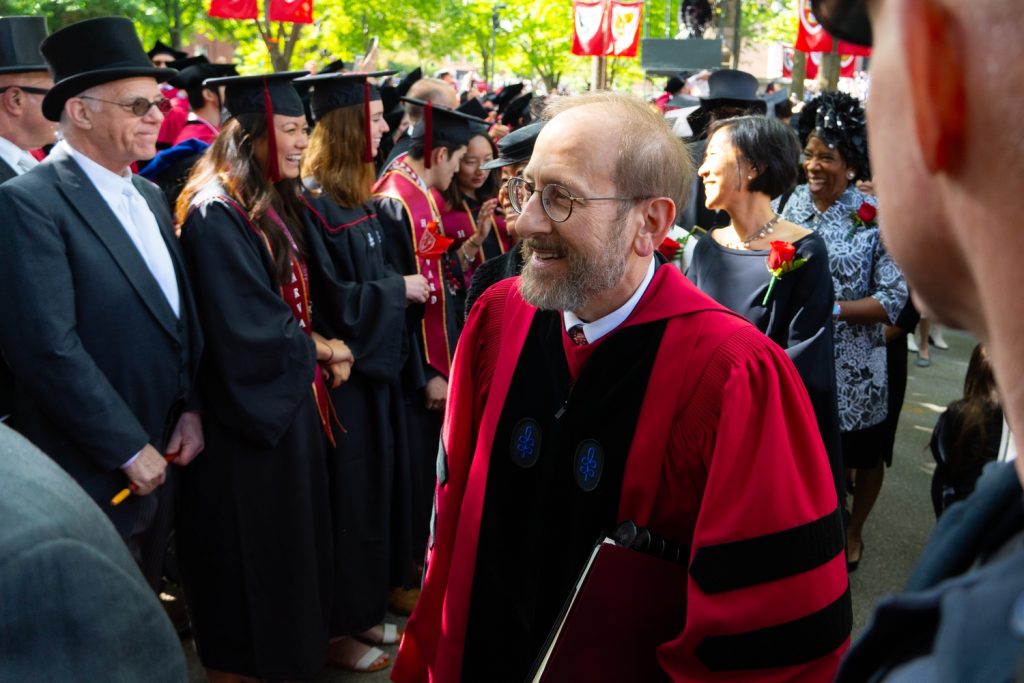
In times of moral crisis, silence is not neutrality—it is complicity. That is why I, along with many others across the nation and beyond, stand with Harvard University President Alan Garber in his bold legal stand against President Donald Trump. What we are witnessing is not just a political feud, nor merely a policy dispute. This is a defining moment about power, academic freedom, and the survival of intellectual sanctuaries in a rapidly polarizing society.
The lawsuit initiated by Harvard is not simply about international student access or frozen federal funding—it’s about resisting tyranny disguised as governance. It is about defending truth in an age where truth is being bullied, bent, and buried by those who see education as a threat to control. President Garber, though soft-spoken and measured in tone, has emerged as an unlikely yet necessary defender of the intellectual and moral integrity of academia.
The Heart of the Matter
At the centre of this legal firestorm is a deliberate and punitive effort by the Trump-led administration to punish Harvard University for what it perceives as ideological disobedience. The administration has moved to revoke Harvard’s certification to host international students and threatened over $2 billion in federal funding for research and academic initiatives. The justification? Alleged bias, antisemitism on campus, and perceived resistance to conservative values.
But let us not be deceived. These actions are not rooted in a genuine concern for justice, nor a desire to protect students—Jewish or otherwise. They are rooted in revenge. In retaliation. In a dangerous precedent that says: if you don’t bend the knee to our politics, we will break your backbone through bureaucracy.
This is not about left or right—it is about right and wrong.
Why This Lawsuit Matters
I support Harvard’s lawsuit because it’s not just about Harvard—it’s about the autonomy of every university, every research institution, every sanctuary of higher learning that exists to challenge the status quo and expand human understanding.
What Trump seeks to do with Harvard he can, and likely will, attempt elsewhere. Today it’s Garber. Tomorrow it could be your alma mater, your children’s university, or even your local community college. If the federal government can weaponize funding and visa control to punish disagreement, we are no longer living in a democracy—we are slipping into authoritarianism.
Harvard’s resistance, led by President Garber, is a prophetic stance. It declares: “We will not be bribed into silence. We will not trade our values for grants. And we will not compromise our mission for fear of retaliation.”
International Students: The Global Lifeblood of Academia
One of the most dangerous aspects of Trump’s campaign against Harvard is the targeting of international students. These students are more than just names on rosters—they are bridges between cultures, contributors to breakthrough research, and living reminders that knowledge knows no borders.
Revoking Harvard’s certification to enrol international students doesn’t just hurt the school; it wounds the world. It sends a chilling message to aspiring scholars everywhere: “You are no longer welcome if your host institution doesn’t align with government politics.”
The fact that President Garber is willing to go to court to defend these students speaks volumes about his leadership. In an era where many leaders fold under pressure, Garber chose the harder path—the legal path, the ethical path, the right path.
The Larger Spiritual and Moral War
I believe there’s a deeper dimension to this battle—one that goes beyond laws and lawsuits. We are in a war between manipulation and truth, darkness and light, control and conscience. Trump’s actions mirror an ancient strategy: silence the prophets, scatter the wise, and burn the books. But history has shown us something else—it is often in these fiery moments that the true protectors of freedom rise.
In the Bible, Daniel refused to bow to Babylon’s agenda. Paul reasoned boldly in the Areopagus. Jesus Himself was a teacher—radically challenging corrupt systems through truth. In that tradition, President Garber now carries the torch.
Not Just a Legal War—A Cultural One
The backlash Harvard is facing is part of a broader assault on education, diversity, and free thought. Libraries are being banned. Books are being pulled off shelves. Critical race theory and gender studies are under attack. Universities are being accused of brainwashing simply because they are fostering dialogue, complexity, and nuance.
Supporting Garber is not a liberal stance—it is a liberty stance. We cannot let education become a casualty of ego or ideology. When presidents and politicians start micromanaging what is taught, who can attend, and which institutions thrive, we are in dangerous territory.
Garber’s stand forces the nation to answer uncomfortable questions: Do we want universities that produce obedient citizens or empowered thinkers? Do we want education that questions or education that conforms?
A Personal Note
As someone who has benefited from the freedom to study, write, think, and question—this is personal for me. Some of my most transformative academic moments came from professors who challenged my worldview, peers who saw the world differently than I did, and texts that rattled my assumptions. That is what education is supposed to do.
To imagine a future where such encounters are censored by government decree is to imagine a future where we are no longer free.
A Call to Others
If you are a student—stand with Harvard.
If you are a teacher—stand with Garber.
If you are an immigrant, a researcher, a believer in freedom of thought—speak out.
Let us not underestimate the power of collective voice. Garber may be leading this legal battle, but he should not fight it alone. We must rally behind those willing to draw the line in the sand before that line is erased completely.
Conclusion: A Line Worth Defending
In the end, this is not about Harvard’s prestige or Trump’s pride. It is about protecting the spiritual DNA of democracy: the right to learn, to speak, to disagree, and to grow.
Alan Garber is not just defending Harvard. He is defending a principle as old as liberty itself. And I, for one, am honoured to say:
I stand with Garber. I stand with truth. And I stand against oppression—no matter how powerful its face may be.
About the Writer
I’m Daniel Elijah Joseph — a writer, truth-seeker, and voice for spiritual and social justice in an age where silence can be deadly. As a university lecturer in Accounting and Finance, and an author of faith-based and truth-driven books, I believe knowledge is sacred and speaking up is a divine responsibility. I write not just to inform, but to awaken. Whether it’s standing with Harvard against authoritarian overreach or confronting darkness in hidden places, my pen is guided by purpose.
Through my blog and books, I challenge injustice, expose deception, and call others into deeper awareness — spiritual, political, and personal. I believe every generation needs voices that won’t flinch in the face of intimidation. I am one of them. And if you’re reading this, maybe you are too.
Follow my work at DanielElijahJoseph.com, where spirit meets strategy, and truth always has a voice.
