
Faith: More Than Belief — A Living Force in Motion
Mar
For many people, faith is often understood as belief—an internal conviction or trust in something greater than themselves. While this definition captures part of its meaning, it does not fully express its power.
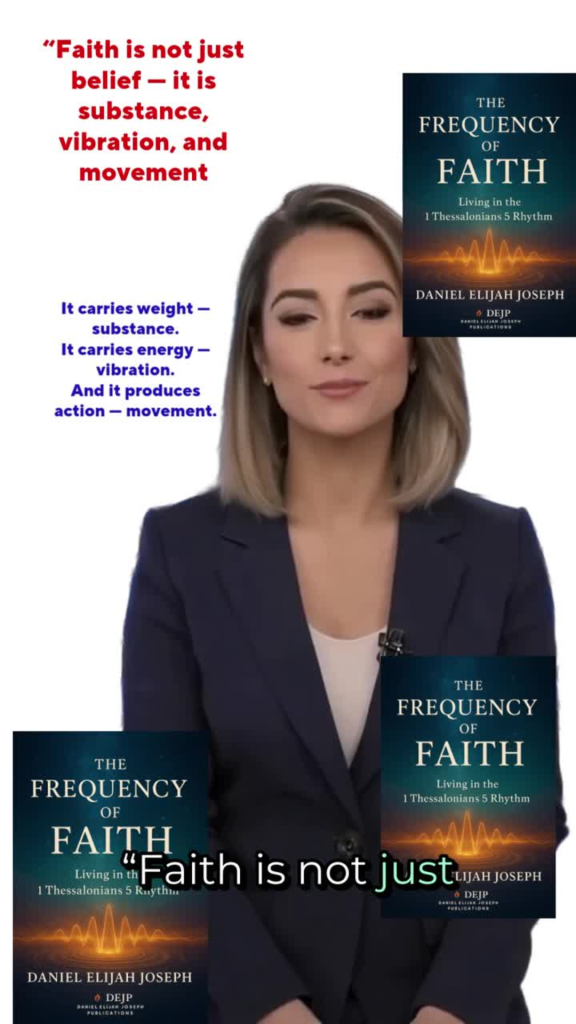
Faith is not just belief—it is substance, vibration, and movement.
Faith as Substance
The idea of faith as substance suggests that it has weight and reality, even if it cannot be physically seen. It is not an abstract concept or a distant hope. Instead, it represents a tangible inner conviction that influences how individuals think, act, and respond.
When someone truly operates in faith, their actions begin to reflect certainty rather than doubt. Decisions are made with clarity, and persistence becomes natural rather than forced.
Faith provides a foundation that supports action.
Faith as Vibration
The concept of vibration can be understood as the internal state that influences how we experience life. Thoughts, emotions, and attitudes all contribute to this internal environment.
When individuals operate from fear, their mindset often becomes limited, reactive, and defensive. However, when they operate from faith, their perspective shifts toward possibility, growth, and purpose.
This shift affects behaviour, communication, and relationships.
Faith changes how people show up in the world.
Faith as Movement
Faith is not passive—it requires action. Belief alone, without movement, does not create change.
Movement involves taking steps aligned with what you believe, even when the outcome is uncertain. It requires courage to act without complete visibility of the result.
This is where faith becomes transformative.
When individuals act in alignment with their beliefs, they begin to create momentum. Each action reinforces confidence, and each experience builds resilience.
Over time, this movement leads to progress.
From Inner Alignment to External Results
The combination of substance, vibration, and movement creates alignment between the inner and outer world. When thoughts, emotions, and actions are aligned, individuals experience greater clarity and direction.
They become less reactive to circumstances and more intentional in their decisions.
This alignment does not eliminate challenges, but it changes how those challenges are approached. Instead of feeling overwhelmed, individuals respond with focus and determination.
Living in the Rhythm of Faith
Faith is not a one-time decision. It is a daily practice. It requires consistency, reflection, and intentional action.
Simple practices such as prayer, journaling, or mindful thinking can help maintain this rhythm. These practices keep individuals connected to their purpose and focused on growth.
Over time, this consistent alignment strengthens both mindset and behaviour.
Faith as a Transformational Force
Faith influences more than personal belief—it shapes reality. It determines how individuals perceive opportunities, respond to obstacles, and pursue their goals.
When applied consistently, faith becomes a force that drives transformation.
It turns ideas into action.
It turns uncertainty into progress.
It turns potential into reality.
📘 Ready to activate faith as a force for transformation?
Discover how in
The Frequency of Faith – Living in the 1 Thessalonians 5 Rhythm by Daniel Elijah Joseph — available now on Amazon.
Get your copy today.
✨ For more insights on faith, mindset, and spiritual alignment, visit
Danielelijahjoseph.com
