
Gaza Is Not for Sale: The Urgency of a Two-State Solution (Final Part)
Feb
Part 5: The Global Responsibility – Why the World Must Act Now
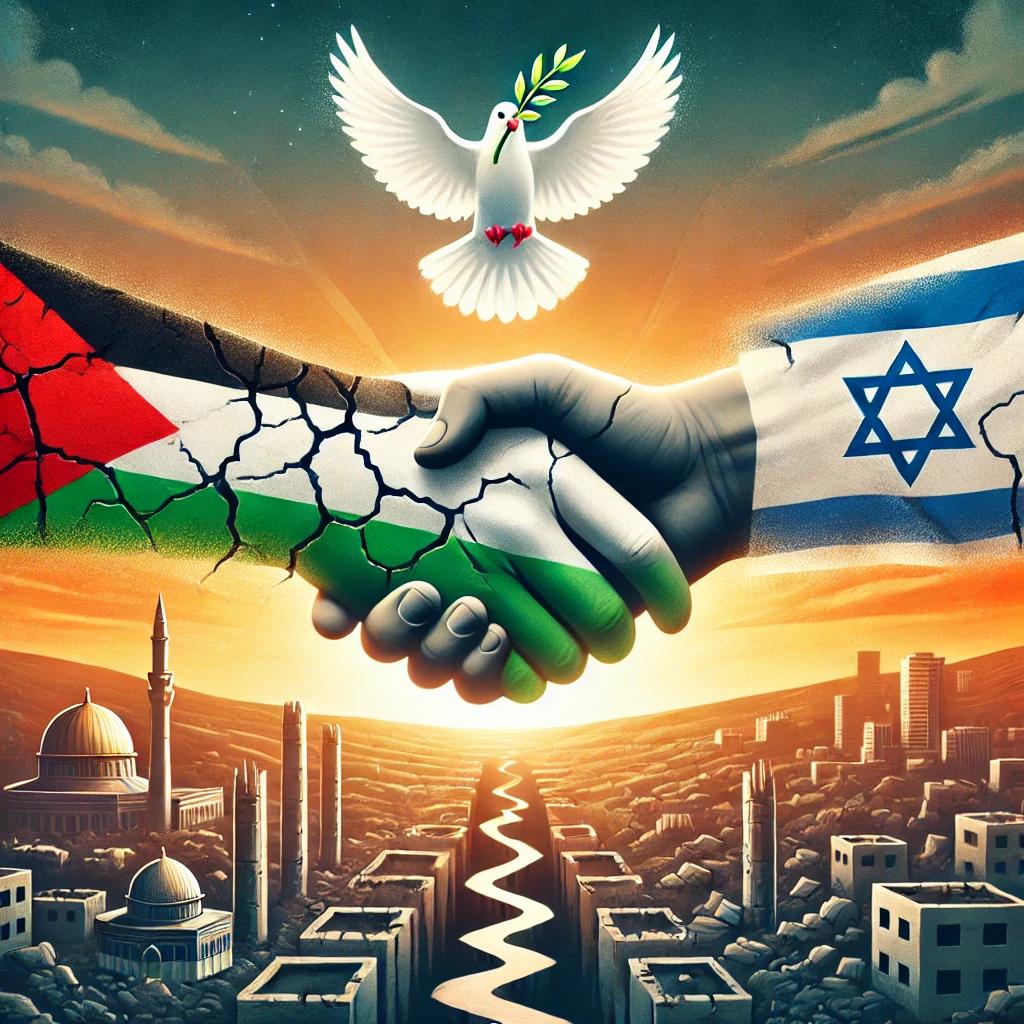
As the humanitarian crisis in Gaza deepens, with the recent genocide leaving tens of thousands dead and a fragile ceasefire offering only temporary relief, the responsibility of the global community has never been more urgent. The world cannot stand idly by while Palestinians continue to suffer under occupation, war, and displacement. The failure to act decisively has prolonged suffering and instability, making it clear that global powers, the United Nations, and regional actors must take concrete steps toward a just and lasting peace.
The Role of Global Powers in Achieving a Two-State Solution
The Israeli-Palestinian conflict is not just a regional issue—it is a crisis with global political, economic, and moral implications. World powers, particularly the United States, the European Union, China, and Russia, must take decisive action to enforce international law and support an equitable resolution.
1. The United States: A Key Player in the Conflict and the Solution
The U.S. has historically been Israel’s strongest ally, providing billions in military aid and using its veto power in the UN Security Council to shield Israel from accountability. However, recent calls from within the U.S. government and civil society for a more balanced approach indicate that the tide may be shifting.
What the U.S. must do:
- End unconditional military aid to Israel, ensuring it does not fund war crimes or occupation.
- Support Palestinian statehood, recognizing Palestine as a full UN member.
- Apply diplomatic pressure to enforce ceasefire agreements and protect Palestinian civilians.
- Back international legal proceedings to hold war criminals accountable for atrocities committed during the recent genocide.
2. The European Union: A Potential Mediator for Peace
The EU has been vocal in condemning Israeli settlement expansion and human rights violations but has failed to take decisive action. European countries must go beyond rhetoric and take concrete measures.
What the EU must do:
- Impose sanctions on Israeli officials responsible for war crimes.
- Recognize Palestine as a sovereign state and encourage diplomatic recognition across Europe.
- Support an international peacekeeping force to protect civilians and monitor ceasefire agreements.
- Leverage economic ties with Israel to push for an end to occupation.
3. China and Russia: Expanding Global Influence
Both China and Russia have shown increasing interest in Middle Eastern geopolitics. Their role in brokering ceasefires and influencing regional politics must be leveraged toward a permanent resolution.
What China and Russia must do:
- Push for a UN Security Council resolution enforcing a two-state solution.
- Limit arms sales to Israel, preventing further militarization of the conflict.
- Offer economic support for Palestinian state-building efforts.
The United Nations: A Failure in Enforcement?
The UN has passed numerous resolutions condemning Israeli occupation and settlement expansion, yet enforcement remains non-existent. The genocide in Gaza and the humanitarian disaster it created have exposed the UN’s inability to act decisively when major powers block resolutions. If the UN is to remain relevant, it must reform its approach to the Israeli-Palestinian conflict.
What the UN must do:
- Enforce legal consequences for violations of international law, including occupation and war crimes.
- Deploy peacekeeping forces to monitor and uphold ceasefire agreements.
- Push for full UN membership for Palestine, ensuring its international legitimacy.
- Facilitate independent war crimes investigations, holding perpetrators accountable regardless of political pressure.
The Role of Regional Players: Arab and Muslim Nations
Arab and Muslim nations have long supported the Palestinian cause, yet their collective action has been inconsistent and, at times, symbolic rather than substantive. The recent genocide in Gaza should push regional powers to take stronger, unified actions in support of Palestinian sovereignty.
1. The Role of Egypt and Jordan
As the only two Arab countries with formal peace treaties with Israel, Egypt and Jordan must take a stronger stance in pressuring Israel to end its occupation and respect ceasefire agreements.
What Egypt and Jordan must do:
- Push for a regional security agreement, ensuring Israel abides by ceasefire terms.
- Advocate for Palestinian representation in international forums.
- Use economic and diplomatic ties with Israel to push for meaningful negotiations.
2. The Gulf States: Economic Leverage and Political Influence
With the Abraham Accords normalizing relations between Israel and several Gulf states, these nations have significant economic leverage over Israel. They must use this influence to demand an end to occupation and war crimes.
What the Gulf States must do:
- Condition economic ties on Israeli compliance with international law.
- Provide substantial financial support to rebuild Gaza and support Palestinian self-governance.
- Break silence on Israeli war crimes, taking a firmer public stance.
3. Iran and Turkey: Political and Military Influence
Both Iran and Turkey have presented themselves as defenders of Palestinian rights, but their actions have often been more about political maneuvering than substantive support. If they truly seek justice for Palestine, they must focus on diplomacy rather than military escalation.
What Iran and Turkey must do:
- Support Palestinian-led diplomacy, rather than using the issue for political leverage.
- Work with international bodies to ensure Palestinian statehood is achieved peacefully.
- Prevent proxy conflicts, which only escalate tensions and distract from real solutions.
The Urgency of Action: Why the World Cannot Wait
The recent genocide in Gaza and the ongoing ceasefire demonstrate that delaying a resolution only leads to further bloodshed and suffering. The world has witnessed massacres, destruction, and the collapse of human rights in Palestine, yet action remains slow and ineffective.
What Will Happen If the World Fails to Act?
- More massacres and displacement, with each war being worse than the last.
- A growing humanitarian disaster, pushing millions into starvation and statelessness.
- Global instability, as the conflict fuels further radicalization and geopolitical tensions.
Conclusion: The World Must Choose Justice Over Politics
The responsibility for ending the suffering in Palestine does not lie solely with Palestinians or Israelis—it lies with the entire international community. Every moment of delay costs more lives, and the genocide in Gaza should be the final wake-up call for the world to act decisively.
The world must demand:
- Immediate recognition of Palestinian statehood.
- Severe consequences for human rights violations.
- An enforced two-state solution that guarantees security and sovereignty for both sides.
Gaza is not for sale, and Palestine is not a bargaining chip. The time for justice is now. The question remains: Will the world finally act, or will it allow history to repeat itself?
©
Gaza is not for Sale, a Two state Solution is the only ANSWER
GOD is LOVE♥
Faithful followers of Jesus Christ watch and pray – we are in dark times. Trust NO-ONE until they show themselves trustworthy. They must earn our TRUST.
Until Next time, Keep Believing, Keep Hoping & Keep Loving.
Peace. Daniel – The Christian Activist & Warrior
Remember, Jesus Christ is the Light of the World.
Thank you, and God Bless
