
When Faith Becomes a Force: Lessons from Smith Wigglesworth
Mar
Throughout history, certain individuals have demonstrated a level of faith that challenges conventional understanding. One of the most well-known figures in this area is Smith Wigglesworth, a British evangelist whose ministry became closely associated with divine healing.
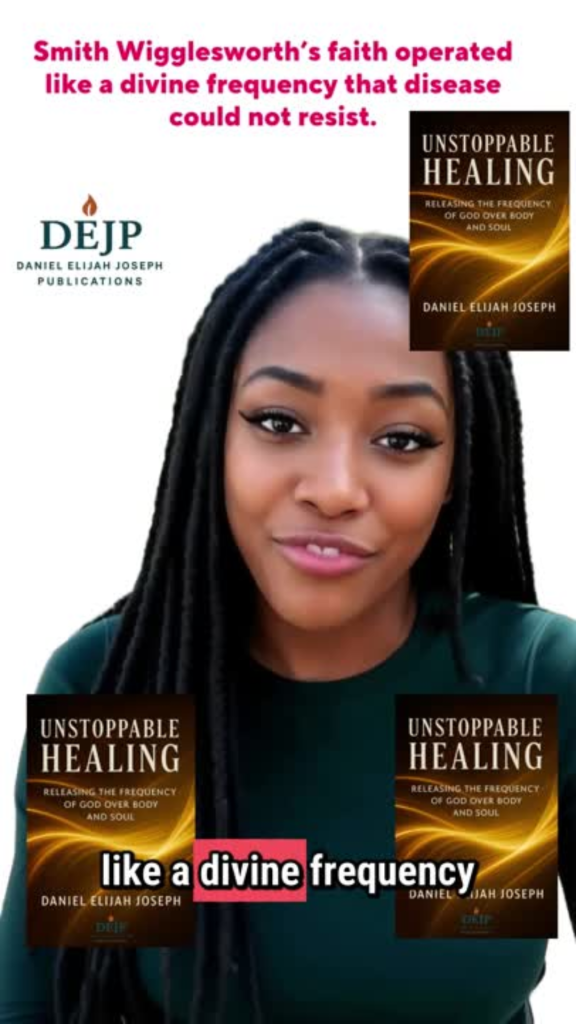
It has often been said that his faith operated like a divine frequency that disease could not resist. While this language is symbolic, it points to a deeper spiritual principle: alignment with God can influence both the inner and outer dimensions of life.
Faith Beyond Emotion
One of the defining characteristics of Wigglesworth’s life was his unwavering belief. His faith was not dependent on circumstances or feelings. Instead, it was grounded in a strong conviction that God’s power was active and available.
This kind of faith differs from ordinary belief. It is not passive or uncertain—it is decisive and focused. It moves beyond doubt and operates with clarity and expectation.
For Wigglesworth, faith was not just something to think about. It was something to live out consistently.
The Concept of Spiritual Alignment
The idea of a “divine frequency” can be understood as alignment with God’s presence. When individuals focus on prayer, scripture, and spiritual awareness, they begin to shift their mindset and perspective.
This alignment affects how they respond to challenges, including illness and adversity. Rather than focusing on limitations, they direct their attention toward possibility and restoration.
While different individuals may interpret this concept in various ways, the central idea remains consistent: faith can influence experience.
The Role of Expectation
Expectation played a key role in Wigglesworth’s ministry. He approached situations with the belief that change was possible. This expectation shaped how he prayed and interacted with others.
When people expect positive outcomes, they often behave differently. They become more hopeful, more proactive, and more open to solutions. This shift in mindset can have practical effects on well-being and resilience.
Faith and Responsibility
It is important to understand that faith does not eliminate the need for personal responsibility or practical action. Instead, it complements it. Faith can provide the motivation and perspective needed to pursue healing, growth, and positive change.
Wigglesworth’s legacy encourages individuals to combine spiritual conviction with intentional action.
A Message for Today
The message behind Wigglesworth’s life continues to resonate because it speaks to a universal desire: the desire for transformation.
Whether viewed through a spiritual or psychological lens, the idea remains powerful. When individuals cultivate strong belief, maintain hope, and align their thoughts with positive outcomes, they create conditions where change becomes possible.
Faith as a Transformative Force
Faith, at its core, is about trust—trust in a higher power, trust in purpose, and trust in the possibility of change.
When this trust becomes consistent and deeply rooted, it influences how people think, act, and live.
This is what makes faith more than inspiration.
It becomes a force for transformation.
📘 Discover how to activate faith and align with divine healing in
Unstoppable Healing: Releasing the Frequency of God Over Body and Soul by Daniel Elijah Joseph — available now on Amazon.
Get your copy today.
✨ For more insights on faith, healing, and spiritual growth, visit
Danielelijahjoseph.com
