
Trump, Netanyahu, World Leaders — How Do You Sleep at Night While Gaza Starves (Part 2 of 7)
Apr
Important Context:
This 7-part exposé reveals the hidden truths about Gaza during Donald Trump’s first term as U.S. President (2017–2021).
With Trump now serving a second term, understanding the events of his first presidency — and how they shaped today’s ongoing crisis — is more urgent than ever.
Download your FREE copy now before this vital history is buried or forgotten.
👉 URGENT:
This vital truth about Gaza’s suffering could disappear any moment.
Download your FREE 7-Part Gaza eBook now — before they take it down!
👉 Secure your copy here before it’s too late!
Part 2: Trump’s Middle East Legacy: From Embassy Moves to Empty Plates
The Middle East has long been a region where foreign policies ripple into lives with breathtaking speed and devastating impact. Few political moves in recent history, however, have triggered such a seismic shift in the humanitarian landscape as the decisions made during Donald Trump’s presidency. While many of these choices were framed as bold acts of diplomacy, for the people of Gaza, they translated into deeper isolation, economic collapse, and empty plates on their tables.
Trump’s Middle East legacy is often discussed in the language of peace deals, economic normalization, and strategic victories. Yet beneath the headlines and political fanfare lies a grimmer truth: his administration’s policies tightened the stranglehold around Gaza’s already suffocating neck, exacerbating a humanitarian disaster that the world still struggles—or refuses—to fully confront.
The Embassy Move: A Political Earthquake
In December 2017, Donald Trump announced the recognition of Jerusalem as Israel’s capital and declared plans to move the U.S. embassy there. For decades, successive U.S. administrations had deferred this move, recognizing the sensitivity of Jerusalem’s status in any future peace deal between Israelis and Palestinians. Trump shattered that precedent in a single, incendiary decision.
While Trump and his supporters hailed it as a fulfillment of campaign promises and a necessary correction of historical wrongs, for Palestinians, the move was an unmistakable signal: their rights, hopes, and futures were expendable.
The announcement ignited protests across the Middle East and provoked widespread condemnation from international bodies. In Gaza, the reaction was immediate and visceral. Demonstrations erupted, and Israeli forces responded with lethal force. Dozens of Palestinians were killed in clashes, including many civilians and even children.
The symbolism of the embassy move was devastating. It sent a clear message that the United States no longer saw Palestinians as equal stakeholders in the peace process. It greenlit further annexation policies and emboldened hardline elements within the Israeli government. For Gaza, it meant even deeper marginalization — and less hope for relief from the ever-tightening blockade.
The Funding Cuts: Starving the Lifelines
If the embassy move was a political earthquake, the Trump administration’s funding cuts to Palestinian aid agencies were a death sentence wrapped in red tape.
In 2018, the Trump administration announced it would end all U.S. funding to the United Nations Relief and Works Agency (UNRWA), which provides essential services to over 5 million Palestinian refugees, including many in Gaza. This decision slashed hundreds of millions of dollars from programs providing food assistance, education, and healthcare.
The impact was catastrophic.
In Gaza, where unemployment hovered above 50% and nearly 80% of the population relied on humanitarian aid, the cuts forced immediate rationing of food supplies. Schools operated by UNRWA struggled to stay open. Medical clinics, already under siege, faced shortages of essential drugs and equipment.
At the heart of this political decision was a cruel irony: Trump claimed the cuts were intended to pressure Palestinians to return to the negotiating table. Yet how could a population fighting daily for survival engage in political negotiations? It was an act of coercion masquerading as diplomacy—using starvation as a means of control.
The “Deal of the Century”: A False Promise
In January 2020, Trump unveiled his long-awaited Middle East peace plan, grandly titled the “Deal of the Century.” Framed as a historic opportunity for Palestinians, the plan was in fact a blueprint for permanent subjugation.
Under its terms, Israel would maintain sovereignty over large swaths of the West Bank, Jerusalem would remain Israel’s undivided capital, and Palestinians would be offered a patchwork of disconnected territories with no true autonomy. Gaza, in particular, was assigned a future tied to vague promises of investment but no actual pathway to freedom or dignity.
The so-called deal did not address the root causes of Palestinian suffering: the occupation, the blockade, the dispossession. Instead, it sought to normalize them under the guise of economic opportunity.
For Gaza, the implications were dire. Trump’s plan effectively abandoned the demand for lifting the blockade. It treated Gaza’s suffering as a fait accompli rather than a humanitarian emergency demanding urgent redress.
Once again, political theater triumphed over human rights, and the children of Gaza paid the price.
Normalization at Any Cost: The Abraham Accords
Trump’s administration also brokered normalization agreements between Israel and several Arab states, including the United Arab Emirates, Bahrain, Sudan, and Morocco. Known as the Abraham Accords, these deals were hailed as historic breakthroughs for regional peace.
Yet while they did mark a new chapter in Middle Eastern diplomacy, they came at the cost of Palestinian aspirations. Gaza’s plight was conspicuously absent from the negotiations.
The Palestinian cause, once a rallying cry for Arab solidarity, was marginalized, treated as a secondary issue—if not an outright obstacle—to be brushed aside in favor of strategic alliances and economic deals.
The normalization agreements emboldened Israel’s hardliners further. With fewer regional consequences to fear, Israeli policies toward Gaza became even more draconian. The blockade persisted, construction materials remained banned or heavily restricted, and humanitarian access continued to be a daily battle.
In Trump’s rush to forge new alliances, Gaza was left further isolated—a political orphan in a rapidly shifting landscape.
Trump’s Rhetoric: Dehumanization Through Language
Beyond policy decisions, Trump’s rhetoric consistently dehumanized Palestinians. In speeches and interviews, he portrayed them as perpetual aggressors, unwilling to make peace, and unworthy of serious negotiation.
This narrative filtered into mainstream discourse, shifting perceptions of Palestinians from victims of occupation to obstacles to peace. It became easier for policymakers and citizens alike to ignore the slow death by starvation unfolding in Gaza.
Language matters. It shapes empathy—or erodes it. Trump’s framing of Palestinians contributed to a climate where mass suffering could be rationalized, excused, or simply ignored.
The Global Domino Effect
Trump’s Middle East policies did not exist in a vacuum. They triggered a global domino effect that weakened international protections for Palestinian rights.
By withdrawing from key UN bodies and undermining international norms, Trump’s administration signaled that humanitarian law was optional, that alliances trumped accountability.
Other nations, seeing the erosion of U.S. leadership on human rights, felt emboldened to sideline the Palestinian cause or to engage in tokenistic gestures without substantive change.
The humanitarian consequences were predictable and devastating. Aid diminished, political will evaporated, and Gaza sank deeper into despair.
Netanyahu’s Perfect Storm
For Benjamin Netanyahu, Trump’s presidency was a political windfall. With Trump’s full-throated support, Netanyahu pursued policies that would have once provoked international outrage—further settlement expansion, annexation plans, and a tightening of the Gaza siege—all with near impunity.
The alliance between Trump and Netanyahu created a perfect storm: ideological zealotry combined with political pragmatism, leaving Gaza to weather the wreckage.
From Empty Promises to Empty Plates
Trump’s Middle East legacy, especially as it relates to Gaza, is a cautionary tale of how diplomatic triumphs for the powerful can translate into humanitarian disasters for the vulnerable.
The embassy moves, the funding cuts, the normalization agreements—all of these were celebrated in the corridors of power. But for the ordinary people of Gaza, they meant emptier shelves, longer breadlines, and darker nights without electricity.
Each political decision widened the chasm between Gaza and the hope for a dignified existence.
The Unhealed Wound
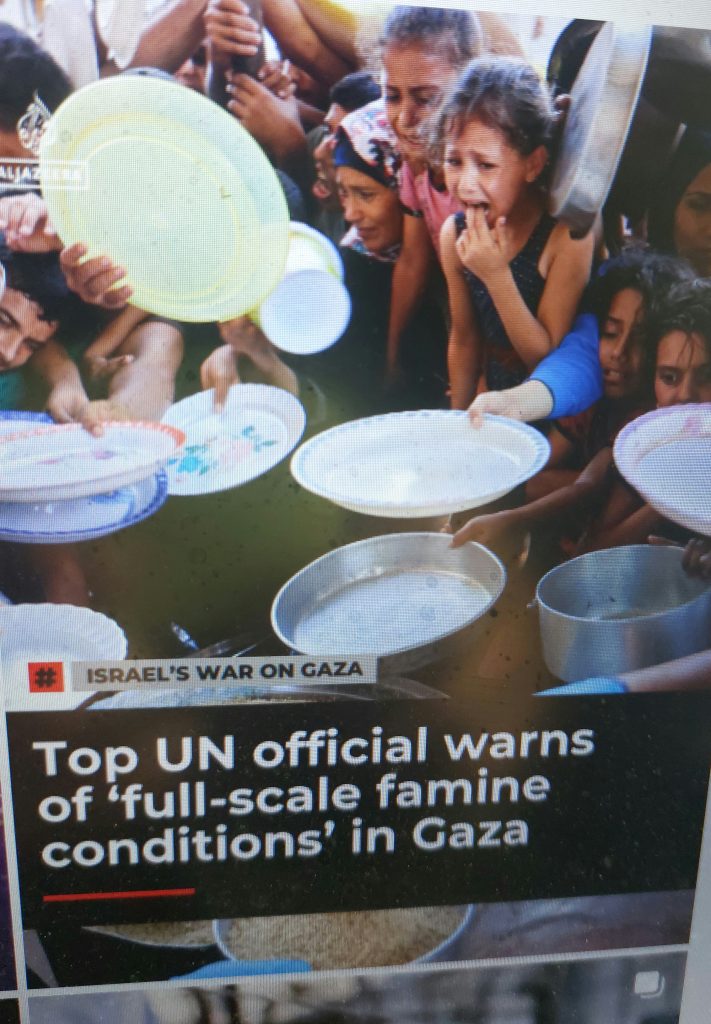
Today, as Gaza faces starvation on a scale not seen in decades, Trump’s policies still cast a long shadow. They accelerated Gaza’s descent into humanitarian collapse and helped normalize the politics of siege and starvation.
The wound remains unhealed—and for many, it festers unseen by a world too weary, too distracted, or too complicit to intervene.
But history will remember. It will record not only the names of those who signed the decrees but also the silent screams of those who paid the price.
Conclusion: Accountability or Amnesia?
Donald Trump’s Middle East legacy cannot be reduced to a few flashy deals and handshakes on the White House lawn. It must be measured in the hunger of Gaza’s children, in the rubble of its hospitals, and in the broken hopes of its youth.
Trump back in the Oval Office, but the consequences of his actions reverberate through every empty plate in Gaza today.
The question that haunts the conscience of the world—and that history demands we answer—is not whether Trump’s policies will succeeded politically, but whether they honored the basic tenets of humanity.
And to that question, the evidence from Gaza offers a heartbreaking, undeniable answer.
👉 FREE Gift for You:
The truth about Gaza’s suffering must never be buried.
Download your FREE copy of the exclusive 7-Part Gaza eBook and uncover what world leaders don’t want you to see.
👉 Click here to get your FREE eBook now!
About the Author
Daniel Elijah Joseph is a fearless voice for the voiceless, blending spiritual insight with unflinching advocacy for truth, justice, and human dignity. His writing exposes the hidden forces behind global suffering and calls readers to reject complacency in the face of oppression.
Through his platform, DanielElijahJoseph.com, Daniel empowers individuals to rise above fear, confront injustice, and walk boldly in their divine calling. His work refuses to sanitize hard truths, choosing instead to illuminate them — because silence in the presence of evil is complicity.
Discover more of his powerful message and mission at DanielElijahJoseph.com.
